
Heating and cooling a home requires a significant amount of energy, especially during freezing winter months and peak summer heat. If your home lacks a proper thermal boundary, expensive conditioned air escapes right through the roof. To help homeowners optimize their property’s thermal performance, we are covering everything you need to know about blow-in insulation. This strategic upgrade creates a seamless, dense barrier against extreme temperatures, drastically improving indoor comfort.
According to the U.S. Environmental Protection Agency (EPA), homeowners can save an average of 15% on heating and cooling costs simply by air sealing their homes and adding insulation in attics, floors, and crawl spaces.
What is Blow-In Insulation?
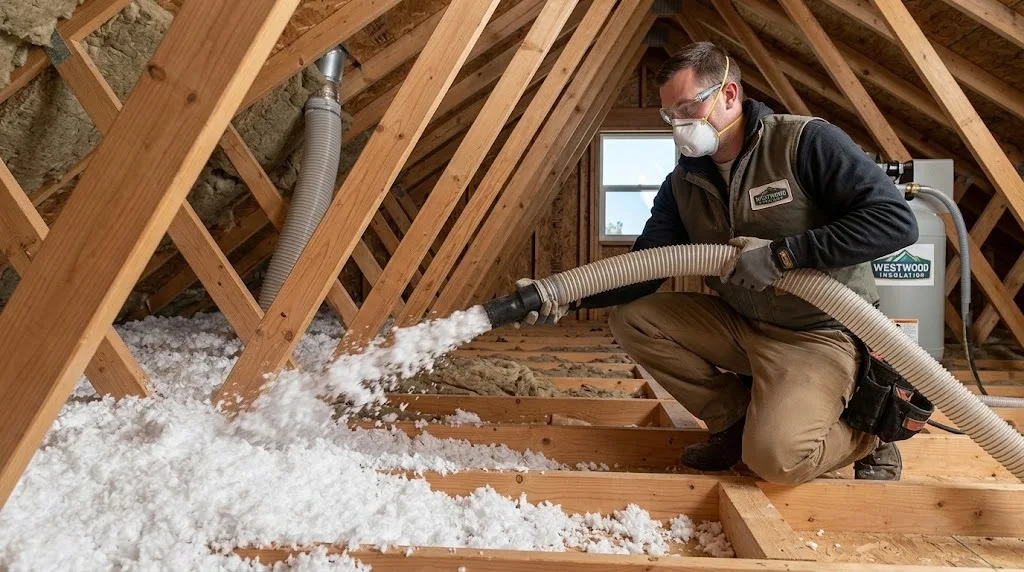
Blow-in insulation, also known as loose-fill insulation, is a highly effective method for thermally upgrading enclosed cavities and open attic spaces. Instead of rolling out large, rigid batts of fiberglass, professional installers use a specialized pneumatic machine to blow loose material—typically fiberglass or cellulose—through a long hose directly into the target area.
Because the material is loose, it easily conforms to any space. It settles around roof trusses, plumbing vents, electrical wires, and tight corners, eliminating the hidden air gaps that often plague traditional batt installations.
Key Benefits of Loose-Fill Upgrades
Upgrading your home with a blown-in thermal barrier provides immediate structural and financial benefits.
- Customizable R-Value: Because the material is blown in loosely, the depth can be tailored exactly to meet or exceed local building codes for optimal thermal resistance (R-Value).
- Seamless Coverage: The loose particles blanket the attic floor continuously, filling odd-shaped crevices and wrapping around structural obstructions to stop draft pathways.
- Acoustic Dampening: A thick layer of dense insulation acts as an excellent sound barrier, deadening exterior noises like heavy rain, hail, or neighborhood traffic.
- Moisture and Fire Resistance: Modern blown materials are treated to resist mold growth and retard fire, adding a critical layer of safety and longevity to your roof system.
Our Professional Installation Approach
At Westwood Insulation, we ensure every project is executed safely and efficiently to deliver maximum energy retention. The process begins with a thorough inspection of your existing attic space to identify air leaks, check ventilation pathways, and measure current insulation depths.
If you want to see exactly what we offer for residential upgrades, visit our services page. We take pride in maintaining a clean workspace and protecting your home throughout the entire installation. You can learn more about our commitment to high craftsmanship on our why choose us page.
Start Saving on Energy Today
Stop letting your heating and cooling budget escape through the roof. Upgrading your thermal barrier is one of the most cost-effective home improvements you can make. If you are ready to stabilize your indoor temperatures, head over to our contact us page to schedule an evaluation with our team.
Frequently Asked Questions
What materials are used for blow-in insulation?
The two most common materials are loose-fill fiberglass and cellulose. Cellulose is typically made from recycled paper products treated with fire retardants, while loose-fill fiberglass is spun from molten glass. Both offer excellent thermal resistance and can be applied directly to attic floors.
Can blow-in material be installed over existing insulation?
Yes. As long as the existing insulation is dry, free of mold, and structurally sound, new loose-fill material can be blown directly over old fiberglass batts or older loose-fill to increase the overall R-value of the attic.
Will the insulation settle over time?
Cellulose insulation does experience some minor settling (usually 10% to 20%) over the first few years, which is factored into the initial installation depth. Advanced loose-fill fiberglass is engineered to resist settling, maintaining its volume and thermal resistance for decades.
How long does a standard installation take?
Most residential attic installations can be completed in a single day. Our team typically finishes the air sealing and blowing process within a few hours, minimizing any disruption to your daily routine.
How do I know if my current attic insulation is insufficient?
If you can easily see the wooden floor joists in your attic, your insulation levels are too low. Additionally, warning signs like wildly fluctuating indoor temperatures, high winter heating bills, or ice dams forming on your roof gutters indicate that heat is escaping through the attic.